

Yes, you absolutely can make perfume from essential oils — and it’s easier than you might think. Using essential oils is a natural, customizable way to create a scent that’s completely your own. You can choose every ingredient, mix your favorite notes, and avoid the harsh chemicals often found in commercial perfumes.
In recent years, essential oil perfumes have become a huge trend. More people are looking for clean, plant-based fragrances that feel authentic and sustainable. From homemade blends to small-batch natural brands, essential oil perfumes are changing how we think about scent — it’s not just about smelling good, but also about feeling good with what you wear.
In this guide, you’ll learn exactly how to make your own essential oil perfume — step by step. We’ll cover the best oils to use, how to mix and store your blend, and a few easy recipes to start with. And if you’re thinking about turning your hobby into something bigger, we’ll also share how professional perfume packaging can help you create a more refined, commercial-ready product that’s ready to impress customers.
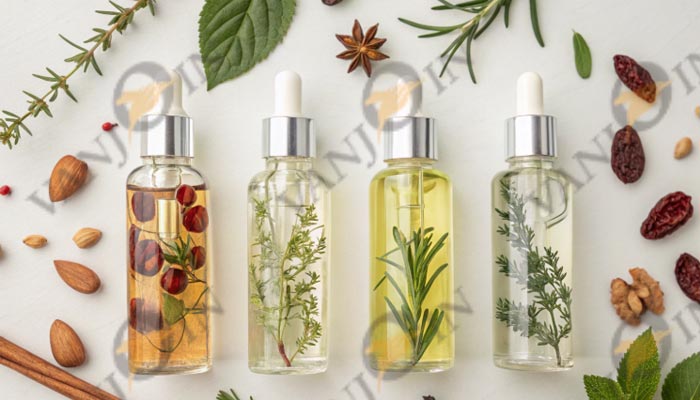
What Are Essential Oils & Why They Work in Perfume
First, let’s break down what essential oils really are — they’re concentrated, natural extracts taken from plants, like flowers, leaves, peels, or roots. The two most common ways to get them? Distillation (think steaming plants to capture their scented oils) and cold-pressing (squeezing oils directly from things like citrus peels, no heat needed). These methods keep the oils’ pure, true scents intact — which is why they’re perfect for perfume.
The magic of essential oils in perfume comes from how they work as top, middle, and base notes — these three layers mix to create a scent that unfolds over time, not just smell the same the whole day.
Top notes are the first scent you smell when you spritz perfume — light, fresh, and quick to brighten things up. Citrus oils (like orange or lemon) are classic top notes.
Middle notes kick in once the top notes fade — they’re the “heart” of the perfume, adding depth and balance. Lavender is a popular middle note, soft and calming.
Base notes stick around the longest, lingering on your skin for hours. They ground the scent and make it last — vanilla or sandalwood oils are great base notes.
To make it even easier, here’s a simple table of common essential oils and their note categories:
| Note Type | Common Essential Oils | Scent Character |
| Top Notes | Lemon, Bergamot, Grapefruit | Fresh, citrusy, uplifting |
| Middle Notes | Lavender, Rose, Geranium | Floral, smooth, balanced |
| Base Notes | Vanilla, Sandalwood, Patchouli | Warm, deep, long-lasting |
By blending oils from these three layers, you can create a balanced perfume that evolves beautifully as you wear it. For example, a mix of citrus (top), lavender (middle), and vanilla (base) gives a classic, refreshing scent that feels both clean and comforting.
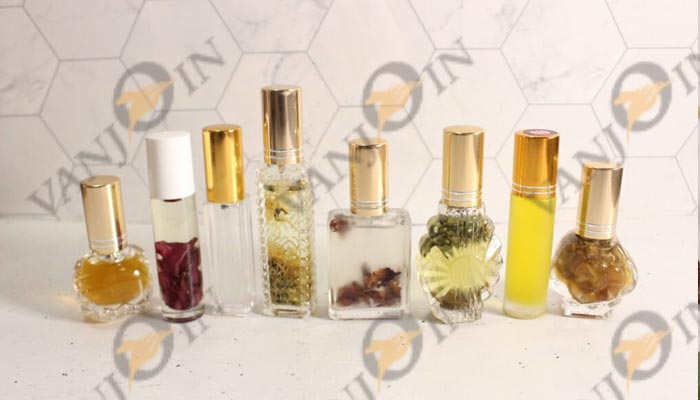
How to Make Perfume with Essential Oils
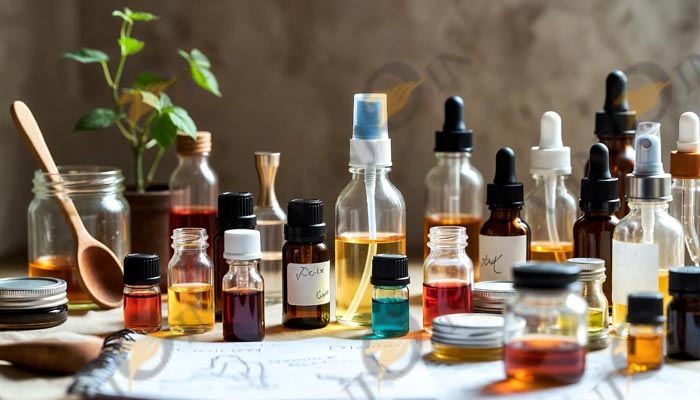
Making your own perfume with essential oils is simple and fun — and there’s no one right way to do it. You can create a perfume with alcohol, a non-alcoholic (oil-based) version, or even a light mist spray. Each type gives a different texture, strength, and lasting power. Here are 3 easy recipes you can try at home, each with clear steps and tips.
1. Alcohol-Based Perfume (Long-Lasting Scent)
This is the most common type, as alcohol helps the scent spread and last.
What you need: 2 tbsp high-proof alcohol (like vodka), 15-20 drops essential oils (follow top: middle: base = 3:2:1), ½ tbsp distilled water, small glass bottle, fixative (e.g., 1 drop vanilla oil).
* Pick your alcohol base — vodka works best because it’s odorless and won’t mask your oils.
* Mix your essential oils in a bowl first: try 9 drops orange (top) + 6 drops lavender (middle) + 3 drops vanilla (base).
* Add the oil blend to the alcohol, then stir in the fixative to help the scent stick longer.
* Pour in the distilled water, shake gently, and transfer to a glass bottle.
* Let it sit in a cool, dark place for 1-2 weeks (shake once a day), then add a label.
* Pro tip: Don’t skip the resting time — it helps the scents “marry” and smell smoother.
2. Oil-Based Perfume (Gentle for Sensitive Skin)
No alcohol means it’s softer on skin, though the scent stays closer to the body.
What you need: 2 tbsp carrier oil (jojoba, sweet almond, or fractionated coconut oil), 10-15 drops essential oils (3:2:1 ratio), small rollerball or glass jar, fixative (e.g., 1 drop sandalwood oil).
* Choose a carrier oil — jojoba is great because it’s lightweight and doesn’t go rancid quickly.
* Mix your oils: try 6 drops lemon (top) + 4 drops rose (middle) + 2 drops sandalwood (base).
* Stir the oil blend into the carrier oil, then add the fixative.
* Pour into a rollerball bottle (easy to apply!) or jar, then label it.
* Pro tip: Test a tiny bit on your wrist first — carrier oils are gentle, but it’s always safe to check for irritation.
3. Mist-Type Perfume (Light, Refreshing)
Perfect for a quick spritz, like a body mist — light and cooling.
What you need: 3 tbsp distilled water, 1 tbsp witch hazel (helps mix oils and water), 8-12 drops essential oils (3:2:1 ratio), spray bottle, fixative (e.g., 1 drop vanilla oil).
* Pick witch hazel as your “bridge” — it stops the oils from floating on top of the water.
* Mix your oils: try 6 drops bergamot (top) + 4 drops lavender (middle) + 2 drops vanilla (base).
* Add the oil blend to the witch hazel first, stir well, then pour into the spray bottle with water.
* Shake hard before each use (oils and water separate!), then label.
* Pro tip: Keep it in the fridge for a refreshing spritz on hot days.
No matter which type you choose, perfume-making is all about creativity. Experiment with ratios, write down your favorite blends, and name your creations — it’s your scent, your story. And if you ever plan to share or sell your perfumes, choosing the right glass perfume bottles will make all the difference in presentation and preservation.
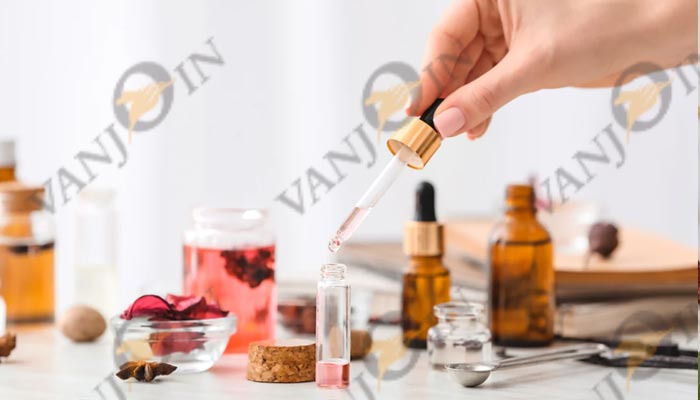
Try These Blends: Best Essential Oil Combinations for Perfume
Once you get the hang of notes, mixing essential oils becomes even more fun — and these classic combinations are sure to work, whether you’re making perfume for yourself or testing ideas for your business. They’re balanced, crowd-pleasing, and easy to tweak to match your style.
1. Floral & Fresh: Lavender + Bergamot + Vanilla
This blend feels calm, clean, and perfect for everyday wear.
How it works: Bright bergamot (top note) cuts through the softness of lavender (middle note), while warm vanilla (base note) adds a cozy finish that lingers.
Ratio to try: 4 drops bergamot + 6 drops lavender + 2 drops vanilla.
Why you’ll love it: It’s not too sweet, not too floral — just a fresh, approachable scent that works for day or night.
2. Woody & Spicy: Sandalwood + Patchouli + Clove
For anyone who loves deep, warm, and slightly earthy fragrances, this blend is a winner.
How it works: Rich sandalwood (base note) is the star, with earthy patchouli (middle note) adding depth, and a tiny hint of spicy clove (top note) for a subtle kick.
Ratio to try: 2 drops clove + 5 drops patchouli + 5 drops sandalwood.
Why you’ll love it: It’s bold but not overpowering — great for cooler weather or anyone who prefers “warm” scents over fresh ones.
3. Citrus & Clean: Lemon + Grapefruit + Rosemary
This blend is zesty, energizing, and feels like a breath of fresh air — ideal for mornings or summer days.
How it works: Zingy lemon and grapefruit (both top notes) wake up your senses, while herbaceous rosemary (middle note) keeps it from feeling too sweet, adding a “clean” finish.
Ratio to try: 5 drops lemon + 4 drops grapefruit + 3 drops rosemary.
Why you’ll love it: It’s light, uplifting, and smells like freshly washed linen with a citrus twist — perfect for anyone who likes simple, bright scents.
You can use these blends as-is or adjust the ratio to match your personal taste. Remember the basic structure — top (fresh), middle (floral/herbal), and base (woody/sweet) — and experiment until you find a scent that feels uniquely yours. And when your perfect blend is ready, store it in a quality glass perfume bottle to keep the fragrance pure and long-lasting.
Common Mistakes & Tips
Even though making perfume with essential oils is simple, a few common mistakes can affect the final result. Paying attention to these details will help your perfume smell better, last longer, and be safe for your skin.
1. Using Too Much Essential Oil
One of the biggest mistakes beginners make is adding too much essential oil. More oil doesn’t always mean a stronger or better scent — it can actually become overwhelming or cause skin irritation. Stick to a total concentration of 15–30% essential oils for alcohol-based perfumes and 20–30% for oil-based blends.
Pro tip: Stick to the 3:2:1 ratio (top: middle: base) we covered earlier, and limit yourself to 3-5 oils per blend. Start small, test the scent, and add more drops only if needed.
2. Skipping the “Resting” (Aging) Phase
It’s tempting to use your perfume right after mixing, but skipping the resting time means you’re missing out on a smoother, more cohesive scent.
Why it’s a problem: When you first mix oils and carriers (like alcohol or jojoba), the scents are “fresh” but separate. Resting lets them “marry” together, softening harsh notes and creating a unified fragrance.
Pro tip: For alcohol-based perfumes, rest them for 1-2 weeks in a cool, dark place (shake once a day). For oil-based blends, 3-5 days is enough — patience pays off!
3. Forgetting a Skin Patch Test
Essential oils are natural, but that doesn’t mean they’re always gentle on skin — especially for sensitive types. Skipping a patch test is a risky move.
Why it’s a problem: Oils like citrus, clove, or cinnamon can cause redness, itching, or even allergic reactions if applied directly to untested skin.
Pro tip: Before wearing your perfume, dab a tiny amount of the blend on the inside of your wrist. Wait 24 hours — if there’s no irritation, it’s safe to use.
4. Overlooking Fixatives (or Using the Wrong Ones)
Fixatives keep your perfume’s scent from fading too fast — but many people skip them, leading to a fragrance that disappears within an hour.
Why it’s a problem: Without a fixative, light top notes (like citrus) will vanish quickly, leaving only the middle or base notes (which might not be the scent you wanted).
Pro tip: Add a small amount of a natural fixative, like vanilla oil, sandalwood oil, or even a pinch of benzoin resin. Start with 1-2 drops per blend — you don’t need much!
5. Safety and Professional Blending Matter
Essential oils are powerful natural ingredients, but they still require care and precision. Always work with clean tools, measure carefully, and choose pure, high-quality oils. If you plan to sell or share your perfumes, professional blending and proper packaging show reliability and build trust with customers.
Using safe materials and quality glass bottles not only protects your formula but also gives your perfume a polished, professional look — an essential step if you’re moving from DIY to a real fragrance business.
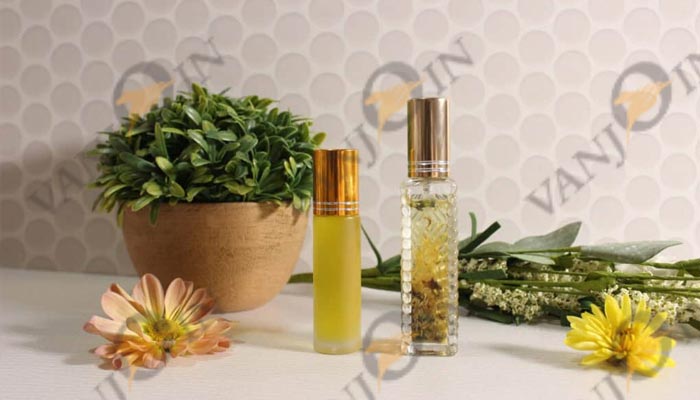
When to Go Pro?
If you’re just making perfume for yourself, DIY methods are perfect — simple, fun, and creative. But if you start thinking about selling your perfumes, it’s time to step up and think like a professional.
Fragrances are delicate by nature — exposure to light or air over time can cause the scent to fade or the color to shift. That’s why the type of packaging you choose makes a real difference. Dark-toned or frosted glass bottles help block light and reduce oxidation, keeping your formula stable and long-lasting.
However, while DIY perfume making is perfect for personal use, scaling up to a commercial level requires more than just a nice bottle and a simple blend. Professional perfume production involves several important steps you can’t overlook:
* Regulatory compliance: Different countries have rules about what ingredients you can use, how to label products (like listing all oils), and safety testing — skip this, and you risk fines or product recalls.
* Consistent quality: DIY batches can smell slightly different each time, but customers expect the same scent every time they buy. You’ll need tools to measure oils precisely and processes to test every batch.
* Production scale: Mixing perfume in small bottles by hand is fine for hobbies, but selling 500+ units a month? You’ll need equipment to speed up blending, filling, and sealing — without cutting corners.
If You’re One of These, It’s Time to Go Pro
You don’t have to be a “big brand” to need professional support. You should consider partnering with experts if you’re:
* A brand founder launching your first perfume line and wants to make a polished, market-ready product.
* A beauty influencer turning your popular DIY perfume recipes into a product your followers can buy.
* A gift customizer creating personalized perfumes for clients and needing packaging that feels premium.
* An essential oil brand expanding into fragrances and wanting to match your existing product quality.
For all these roles, you need four key things to succeed: a reliable supply chain (so you never run out of materials), professional glass perfume bottles (to protect your scent and look high-end), custom design (to make your packaging stand out on shelves), and compliant services (to meet safety standards).
At Vanjoin, we specialize in helping fragrance makers and beauty brands grow from small-batch ideas to full-scale production. We offer premium glass perfume bottles in various shapes, finishes, and capacities — including frosted, gradient, and tinted options — along with custom logo printing, cap matching, and bulk packaging support. Whether you’re producing a few hundred bottles or thousands, Vanjoin ensures every piece reflects your brand’s identity and quality.
Conclusion
Making perfume from essential oils is a wonderful mix of creativity and nature. With just a few ingredients, you can craft a scent that’s completely your own — one that reflects your personality and mood. Whether you love floral, woody, or citrusy notes, essential oils give you endless ways to experiment and enjoy the art of fragrance making.
But if you’re planning to take your passion further — turning your homemade perfume into a real brand or product line — professional packaging and consistency matter. High-quality glass perfume bottles not only protect your formula but also elevate your presentation. At Vanjoin, we support small brands, artisans, and beauty creators with premium perfume bottles, custom designs, and bulk packaging solutions to help you grow with confidence.
FAQ: Making Perfume with Essential Oils
Q1. Can I make perfume using only essential oils?
Yes! Essential oils can be used alone or mixed with a carrier like alcohol or oil. They’re the heart of any natural perfume and provide both fragrance and therapeutic benefits.
Q2. What’s the best ratio for blending essential oils?
A good starting point is 30% top notes, 50% middle notes, and 20% base notes — or roughly a 3:2:1 ratio when creating small batches. Adjust to your liking as you experiment.
Q3. How long should I let my perfume sit before using it?
Let your perfume rest for at least two weeks. This aging process helps the oils blend smoothly and improves the scent’s balance and longevity.
Q4. How do I make my perfume last longer on the skin?
Apply perfume to pulse points (like wrists and neck) and moisturize your skin beforehand. Using base oils such as jojoba or sandalwood also helps the scent stay longer.
Q5. What kind of bottle is best for storing homemade perfume?
Always use glass bottles, preferably amber or frosted glass, to protect your perfume from sunlight and oxidation. Plastic containers can react with essential oils and alter the scent.
Q6. Can I sell my homemade perfume?
You can — but make sure you understand labeling laws, safety testing, and regulatory requirements in your region. Partnering with a professional packaging supplier like Vanjoin can help ensure your products meet commercial standards.
Q7. Where can I find high-quality bottles for essential oil perfumes?
Vanjoin offers a wide range of glass perfume bottles in different shapes, colors, and sizes. You can also customize your packaging with logo printing, unique caps, and finishes to match your brand style.
Vanjoin © All Rights Reserved.